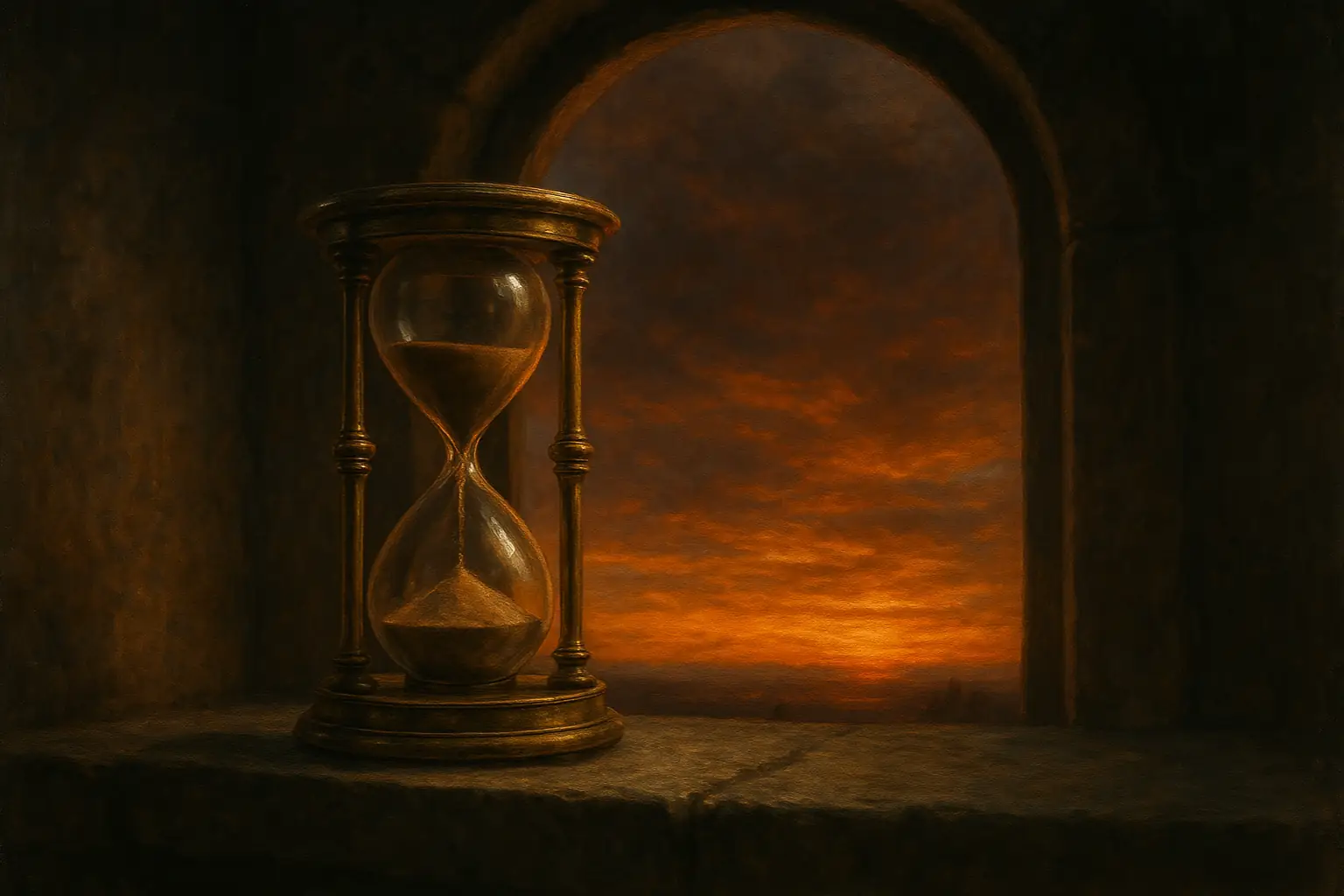
What Buddhists believe
Impermanence, suffering, not-self
The three marks of existence: everything conditioned changes, cannot satisfy, and has no self. The Bible agrees about the first, and answers the other two with God.
What Buddhism teaches
The discourses teach that all conditioned things are impermanent, that what is impermanent is unsatisfying, and that what is impermanent and unsatisfying is not fit to be regarded as self. The Dhammapada calls the body a nest of disease that falls apart.
“Mendicants, form is not-self. For if form were self, it wouldn’t lead to affliction. And you could compel form: ‘May my form be like this! May it not be like that!’ But because form is not-self, it leads to affliction. And you can’t compel form: ‘May my form be like this! May it not be like that!’
Samyutta Nikaya 22.59:2.1-2.5, The Characteristic of Not-Self (tr. Bhikkhu Sujato) · context
This body is decrepit and frail, a nest of disease. This foul carcass falls apart, for life ends in death.
Dhammapada 148, 11. Old Age (tr. Bhikkhu Sujato) · context
What the Bible adds
Scripture also says that all flesh is grass and the world is passing away. But it does not stop there: the word of God stands forever, and God himself does not change. Because he is permanent, his people are not lost when everything else changes.
6The voice of one saying, “Cry out!” One said, “What shall I cry?” “All flesh is like grass, and all its glory is like the flower of the field. 7The grass withers, the flower fades, because Yahweh’s breath blows on it. Surely the people are like grass. 8The grass withers, the flower fades; but the word of our God stands forever.”
Isaiah 40:6-8 (WEB) · context
17The world is passing away with its lusts, but he who does God’s will remains forever.
1 John 2:17 (WEB) · context
6“For I, Yahweh, don’t change; therefore you, sons of Jacob, are not consumed.
Malachi 3:6 (WEB) · context
8Jesus Christ is the same yesterday, today, and forever.
Hebrews 13:8 (WEB) · context
What lasts
Jesus told us not to store up treasure where moth and rust destroy, but in heaven. The impermanence the Buddha saw is real; it is a reason to seek the God who does not pass away.
19“Don’t lay up treasures for yourselves on the earth, where moth and rust consume, and where thieves break through and steal; 20but lay up for yourselves treasures in heaven, where neither moth nor rust consume, and where thieves don’t break through and steal; 21for where your treasure is, there your heart will be also.
Matthew 6:19-21 (WEB) · context
18while we don’t look at the things which are seen, but at the things which are not seen. For the things which are seen are temporal, but the things which are not seen are eternal.
2 Corinthians 4:18 (WEB) · context
Sources
- Earliest source Samyutta Nikaya 22.59; Dhammapada 146-156. Translation: Bhikkhu Sujato (CC0), SuttaCentral.